
IEEE/IEIE ICCE-ASIA 2026
October 28(Wed) – 30(Fri), 2026 / SAINT JOHN’S Hotel, Gangwon-do, South Korea
Program


TODAY 2026. 09. 30
ICCE-ASIA 2026
D-28
Keynote Speech
A 32-Channel Cochlear Implant Platform: Speech Coding and Early Clinical Experience
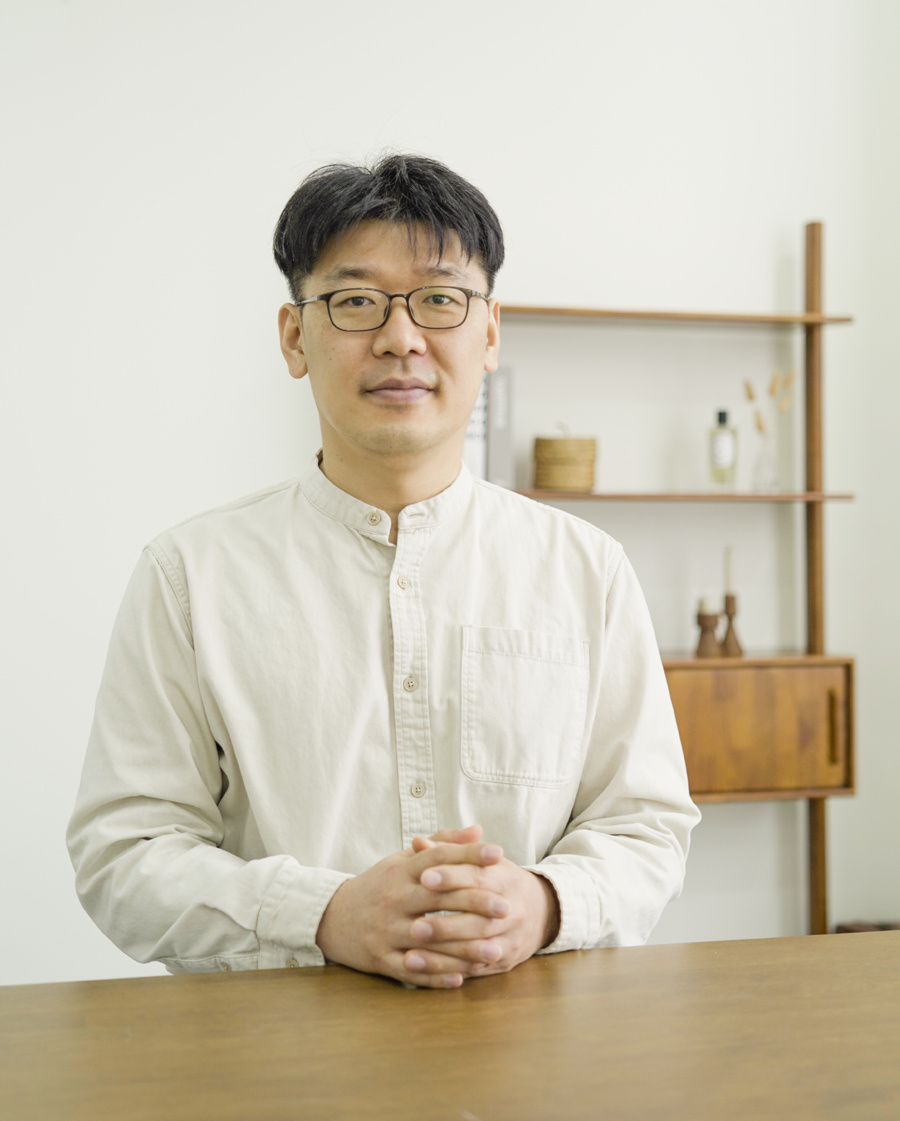
Dr. Kyou-Sik Min
Founder and CEO, TODOC Co., Ltd.
Abstract
Cochlear implants restore access to sound by converting acoustic signals into electrical stimulation of the auditory nerve. Their performance depends on speech coding, the electrode–neuron interface, and the information that recipients can extract from multichannel stimulation. Continuous interleaved sampling and n-of-m channel selection illustrate different ways of distributing electrical pulses across an electrode array. Evidence for benefits beyond eight channels motivates evaluation of denser interfaces, while physical contact count remains distinct from effective spectral resolution. A 32-channel cochlear implant platform developed by TODOC combines a manufacturable platinum–iridium electrode array, wireless power and data transfer, and implantable stimulation electronics. Early clinical experience at Samsung Medical Center includes ten participants receiving thirteen devices. Full insertion was achieved in all implants, and all 32 stimulation channels were activated using continuous interleaved sampling. Sentence recognition improved on average during follow-up, with substantial variation across recipients. The noncomparative cohort supports early feasibility assessment but does not isolate the effect of channel count. Priorities for further evaluation include comparisons of channel configurations and stimulation strategies, neural-response recording, speech and music perception, and implant magnetic resonance compatibility.
Bio
Kyou-Sik Min is the founder and CEO of TODOC Co., Ltd., a Korean company developing cochlear implants and neural interface technologies. He received his bachelor's degree in physics in 2006 and his Ph.D. in electrical engineering and computer science in 2014 from Seoul National University. His doctoral research focused on manufacturable cochlear electrode arrays. Before founding TODOC in 2015, he worked as a senior researcher at Samsung Electronics. His work focuses on scalable electrode manufacturing and implantable electronic systems.
Challenges of AI Infrastructure: How the AI Is Reshaping the Physical and Operational Foundations of IT
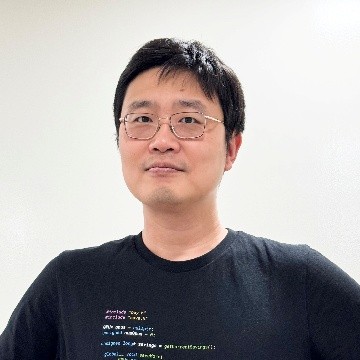
Dr. Jeongkyu Shin
CEO, Lablup Inc.
Abstract
As the fields of AI development and applications grow explosively, AI infrastructure, the physical foundation for AI training and services, is also undergoing tremendous transformation. This talk defines AI infrastructure and discusses the loads and evolutionary pressures that the rapid changes over the past three years have imposed on AI infrastructure and its surrounding domains.
Bio
The founder of Lablup, he envisions a world where anyone, anywhere can use AI. With over 20 years of open source contributions, including serving as lead developer of the Textcube project, he founded Lablup in 2015 and leads development of Backend.AI (https://www.backend.ai), a hyperscale open source AI R&D and service infrastructure platform. Since 2017, he has served as a Google Developers Expert in AI and Cloud, and as a technology mentor at Google for Startups. He currently serves as a member of the Infrastructure Subcommittee of Presidential Council on National AI Strategy. He holds a PhD in Physics from POSTECH and received Korea’s Presidential Commendation (2018) and Industrial Medal (2024).
• (2015–Present) CEO, Lablup Inc.
• (2025–Present) Subcommittee Member, Presidential Council on National AI Strategy (Infrastructure & Innovation)
• (2017–Present) Google Developers Expert (AI / Cloud)
• (2023) Director of the Korean Institute of Communications and Information Sciences (Intelligent SW/Convergence field)
• (2019–2021) Northeast Asia Open Source Software Promotion Forum (Republic of Korea Representative)
• (2016–2019) Adjunct Professor, Computer Science Dept., Hanyang University ERICA
• (2014–2019) Global Open Frontier, KossLab (1st and 3rd cohorts)
• (2004–Present) Maintainer of the Textcube Project
• (2007–2013) Ph.D. in Science, Pohang University of Science and Technology (Complex Systems / Computational Neuroscience)
• (2005–2007) M.S. in Science, Pohang University of Science and Technology (Complex Systems / Statistical Physics)
• (2000–2005) B.S. in Science / B.S. in Engineering, Pohang University of Science and Technology (Physics / Computer Science and Engineering)
