


Gangneung Travel Guide
ICCE-Asia 2026 · Gangneung, Gangwon-do, Korea
01 Gyeongpo Beach Korea's Premier Summer Beach Destination
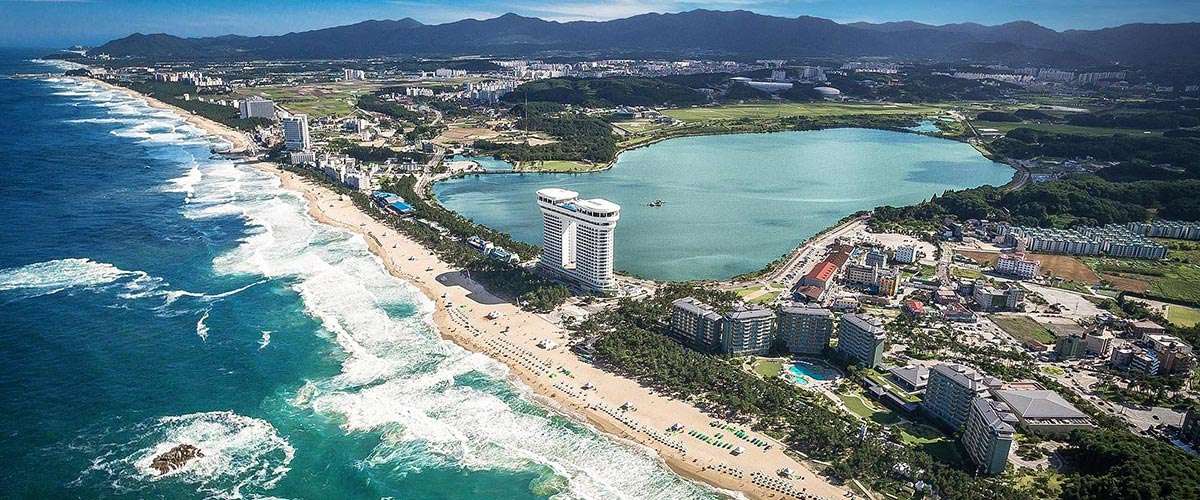
Gyeongpo Beach is one of Korea's most iconic beaches, drawing around 500,000 visitors every summer and ranking among Gangneung's leading attractions.
The beach is well equipped with parking, restrooms, and a nursing room, and the pine forest, campgrounds, and camping sites nearby make it easy to pair sea bathing with a walk through the woods. Each summer the beach also comes alive with local festivals and events, including a summer festival, an air show, and a fireworks display.
Designated a provincial park in June 1982, Gyeongpo Beach lies close to several other notable sights, including Gyeongpodae Pavilion, Lake Gyeongpo, Ojukheon House, the Chamsori Gramophone & Edison Science Museum, and Anmok Coffee Street.
02 Ojukheon House Birthplace of Sinsaimdang and the Confucian Scholar Yulgok Yi I
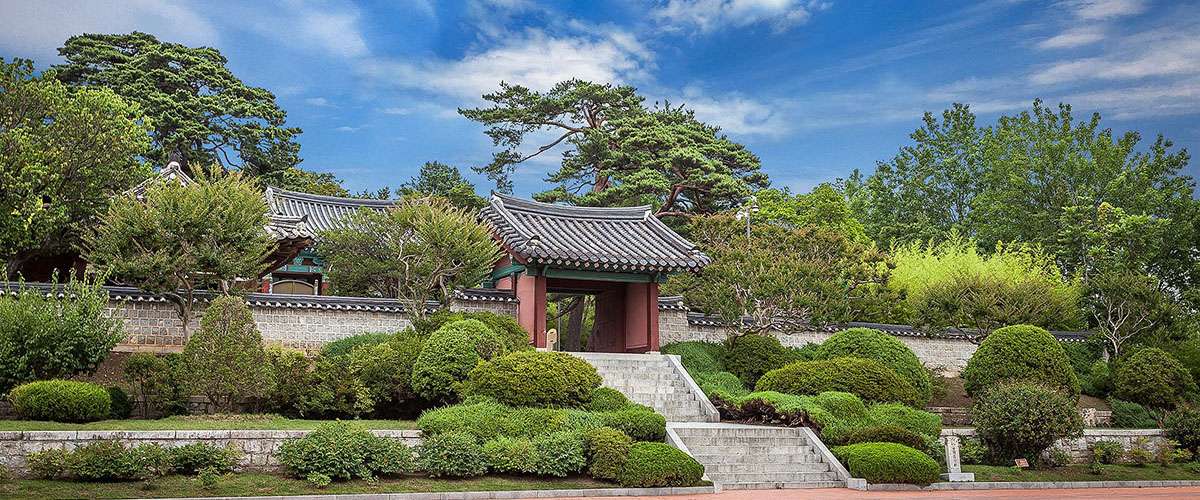
Located in Jukheon-dong, Gangneung, Ojukheon House is the historic home where Sinsaimdang — revered in Korea as an accomplished artist and exemplary mother — and her son, the celebrated Confucian scholar Yulgok (栧谷) Yi I (李獅), were born. A rare surviving wooden dwelling from the Joseon dynasty, it is designated Korean Treasure No. 165.
The house was originally built by the Joseon official Choi Chi-un (崔致雲, 1390–1440). It later took the name by which it is known today after Kwon Cheo-gyun (權處均), struck by the black bamboo growing as dark and dense as crows around the property, adopted “Ojukheon” (“House of the Black Bamboo”) as his pen name. The grounds include Eojegak Hall, home to Yulgok's inkstone and his writings Gyeokmongyogyeol; Munseongsa Shrine and Mongnyongsil, where his portrait is enshrined; and a 600-year-old plum tree said to have been tended by Sinsaimdang and Yulgok themselves, designated Natural Monument No. 484.
The site also houses the Yulgok Memorial Hall, a folk museum, the Gangneung City Museum, and a character-education center dedicated to Yulgok's teachings.
03 Anmok Coffee Street Where the Aroma of Coffee Runs as Deep as the East Sea
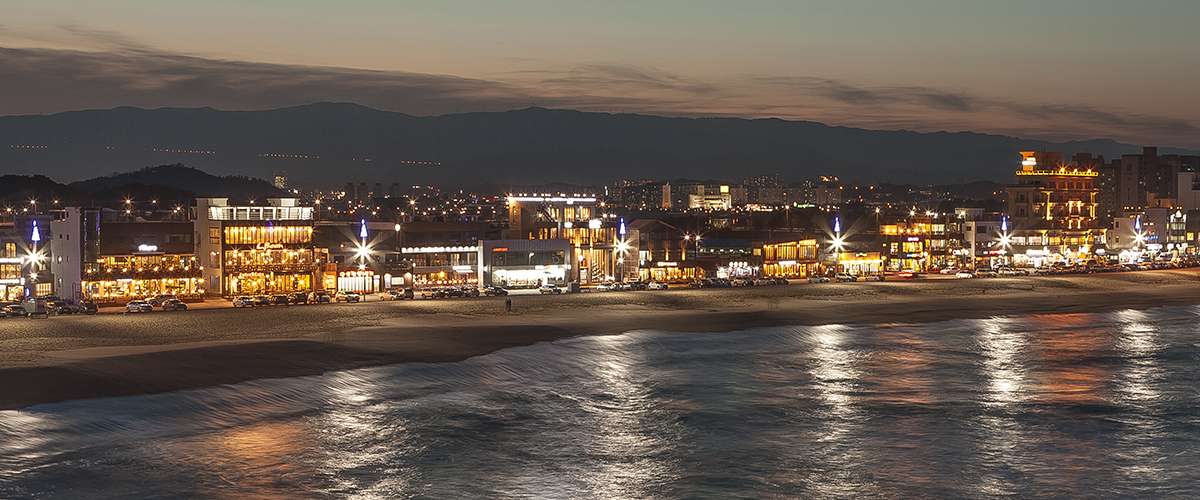
Located along Changhae-ro in Gyeonso-dong, Anmok Coffee Street traces its origins to a humble vending-machine coffee stand near a public restroom, which word of mouth soon turned into a destination in its own right.
In the early 2000s, Korea's first generation of professional baristas settled in Gangneung, helping the city grow into the country's coffee capital. The row of oceanfront cafés lining Anmok Port gained even wider recognition after being featured on the KBS variety show 1 Night 2 Days.
Gangneung was the first local government in Korea to host an annual coffee festival, held every October, and Anmok Coffee Street continues to host concerts, coffee-making experiences, and other cultural events large and small throughout the year. Visitors can enjoy a cup of coffee while taking in the charm of Anmok Beach, and the area connects to Anmok Port (Gangneung Port) and Section 5 of the Baugil Trail, making it a year-round destination for families and couples alike. Nearby attractions include Gyeongpodae Pavilion, Gyeongpo Beach, the Bohemian Coffee Factory, and Terarosa.
04 Coffee Cupper Museum, Wangsan Branch
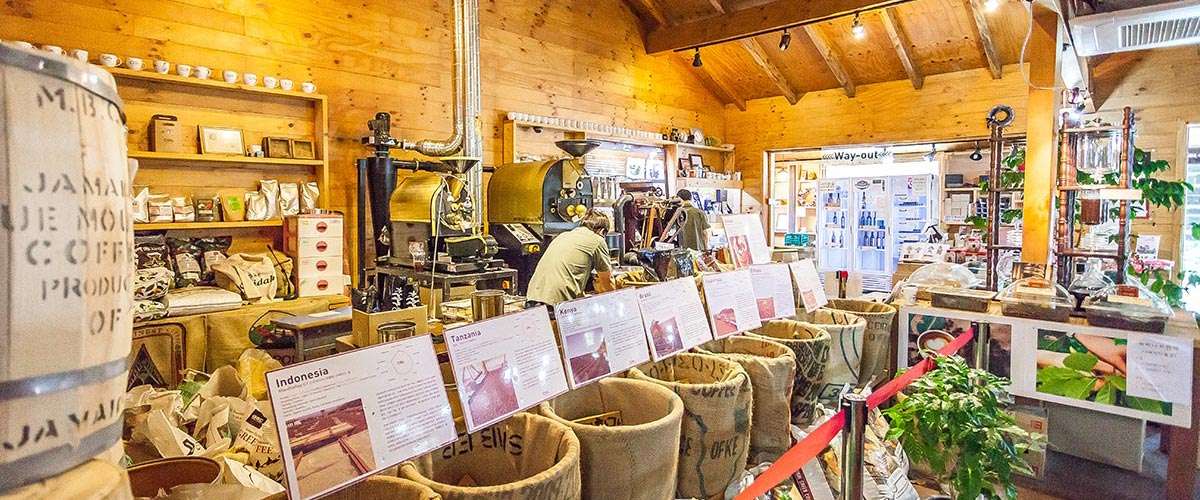
The Coffee Cupper Museum is Korea's largest coffee museum, housing a rare and wide-ranging collection of coffee artifacts from around the world that trace the history and culture of coffee. It is also a working space where visitors can grow coffee plants and learn about roasting firsthand.
Founded in 2000, the museum signed a memorandum of understanding with the government of Mangshi, China in 2011, laying the groundwork for its expansion into mainland China, and went on to open an international coffee museum in Mangshi in 2016.
The museum is organized into five halls: Hall 1 traces the history of coffee; Hall 2 displays early roasters and grinders; Hall 3, Coffee Makers, showcases brewing equipment prized for both performance and design; Hall 4 is a greenhouse home to Korea's oldest coffee trees; and Hall 5 offers a hands-on coffee experience, where visitors who present their admission ticket can enjoy a complimentary cup. Coffee cherries harvested from the museum's own farm are celebrated each year at a coffee tree festival, and the on-site café invites visitors to unwind over a cup of coffee to the sound of the Wangsan valley stream.
05 Jeongdong Simgok Badabuchae-gil (Sea-Fan Path) A Coastal Trail Through Jeongdongjin's Untouched Marine Terraces
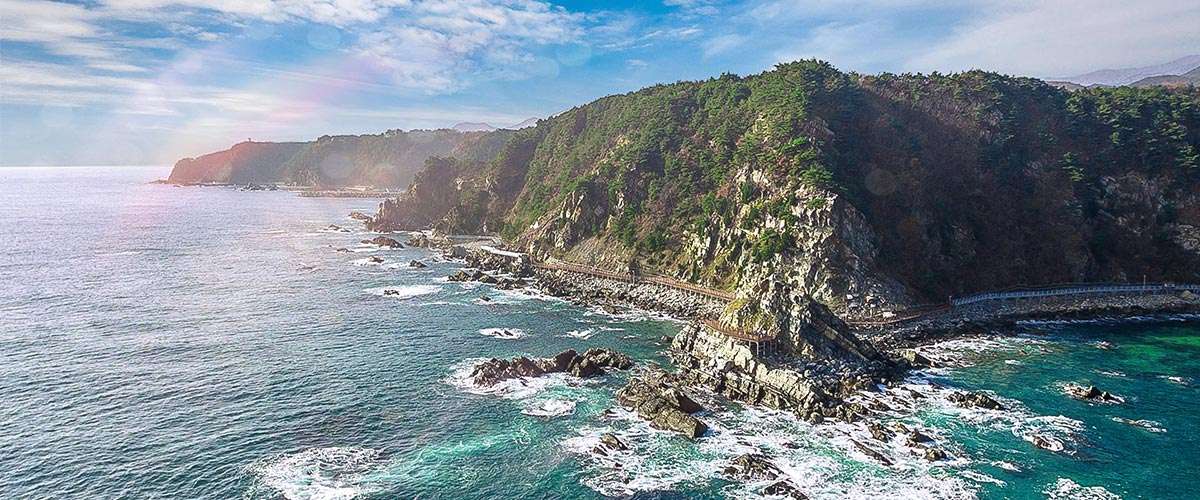
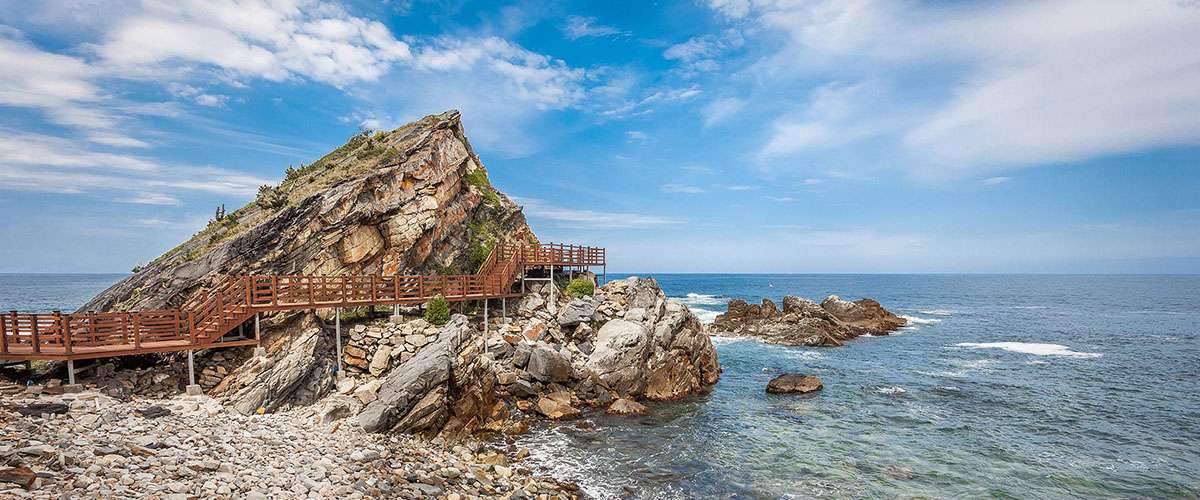
The name “Jeongdong Simgok Badabuchae-gil” combines “Jeongdong,” meaning due east of Hanyang (the historic capital, now Seoul), and “Simgok,” meaning a village nestled in a deep valley. The trail takes its final name, roughly “sea-fan path,” from the shape of its “fan-edge” terrain, which unfolds toward the sea like an open fan.
Designated Natural Monument No. 437, this is Korea's only coastal marine terrace where visitors can observe traces of tectonic movement dating back 23 million years, holding within it the secret of how the East Sea was born. The roughly 2.86-kilometer trail, running from the parking lot at Jeongdongjin Sun Cruise to Simgok Port, offers sweeping views of the deep blue waters of the East Sea and the dramatic rock formations along the coast. Long used solely as a military patrol route for coastal defense, the path remained closed to the public for decades, leaving its pristine scenery remarkably untouched.
From the observation deck in front of Buchaebawi (Fan Rock), visitors can take in the full sweep of the trail in both directions, while the Simgokbada observation point near the entrance to Simgok Port frames Simgok Port and Heonhwa-ro Road to the right, the trail and its striking rock formations to the left, and the open expanse of the East Sea straight ahead — a view that never fails to draw gasps of admiration from visitors.
06 Aranabi Zipline Soar Like a Butterfly Over Namhangjin Beach
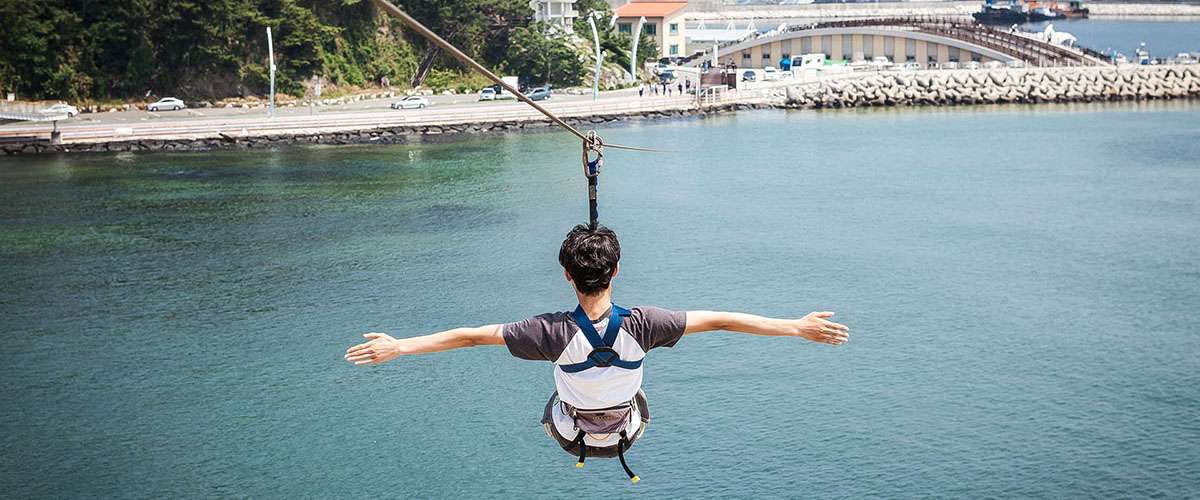
Located on Gonghang-gil in Namhangjin, Gangneung, Aranabi takes its name from a blend of the pure Korean words for “sea” (ara) and “butterfly” (nabi) — a zipline experience built around the idea of flying over the sea like a butterfly.
Korea's first zipline built over open water, Aranabi has been certified for safety by the Korea Transportation Safety Authority and welcomes riders of all ages, in every season. It is also unique among ziplines of its kind in offering a tandem-ride option. Riders take in the beauty of Namhangjin Beach as they soar, adding an extra thrill to the experience. Nearby attractions include Anmok Coffee Street, Gyeongpodae Pavilion, Lake Gyeongpo, Gyeongpo Beach, and Ojukheon House.
07 Daegwallyeong National Healing Forest A Natural Wellness Retreat in the Daegwallyeong Highlands
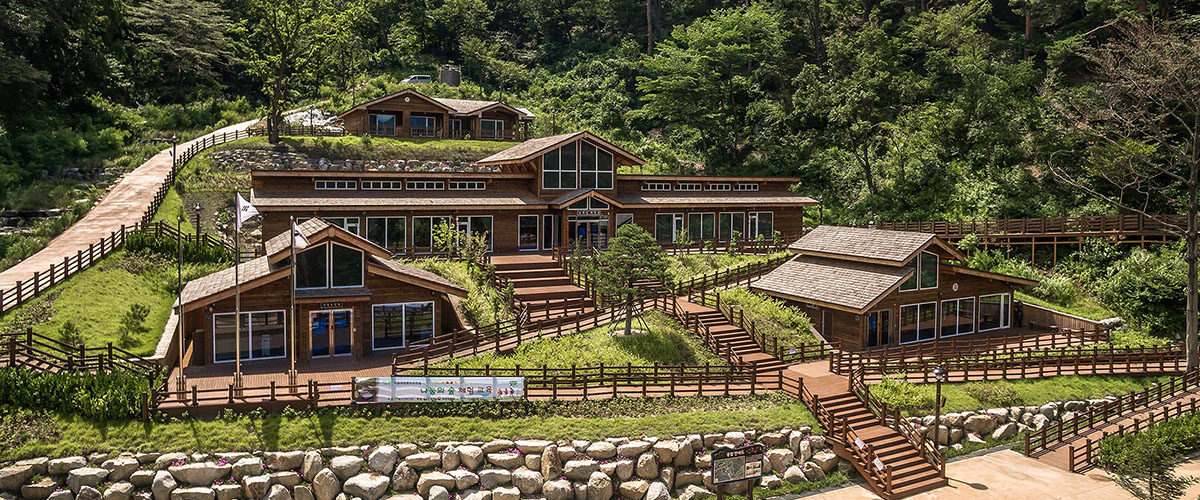
Daegwallyeong National Healing Forest was created to draw on the many natural elements of the forest to promote well-being and strengthen the body's immune function. Its healing qualities come from a combination of scenery, phytoncides, negative ions, oxygen, natural sound, and sunlight found throughout the woods.
Forest healing is known to ease depressive symptoms and lower blood pressure, support faster recovery after surgery, and bring positive relief to conditions such as atopic dermatitis and asthma. Programs are led by certified Level 1 and Level 2 forest healing instructors, and facilities are in place to measure and evaluate their effects. A barrier-free healing deck within the forest allows access for visitors with disabilities and older adults, and tailored forest healing programs designed to support physical and mental recovery are also planned.
Designated by the Korea Forest Service as the nation's fourth official healing forest, the site includes a healing center with health-assessment facilities, program rooms, and a lecture hall, along with a meditation hut, a 5.2-kilometer healing trail, and a 0.6-kilometer healing deck. The forest also runs a prenatal forest program for expectant mothers, a forest school for young people, and other healing programs; participants have their blood pressure, pulse, and stress levels measured before joining the program best suited to them.
08 Anbandegi The Village Above the Clouds, Where the Sky Begins
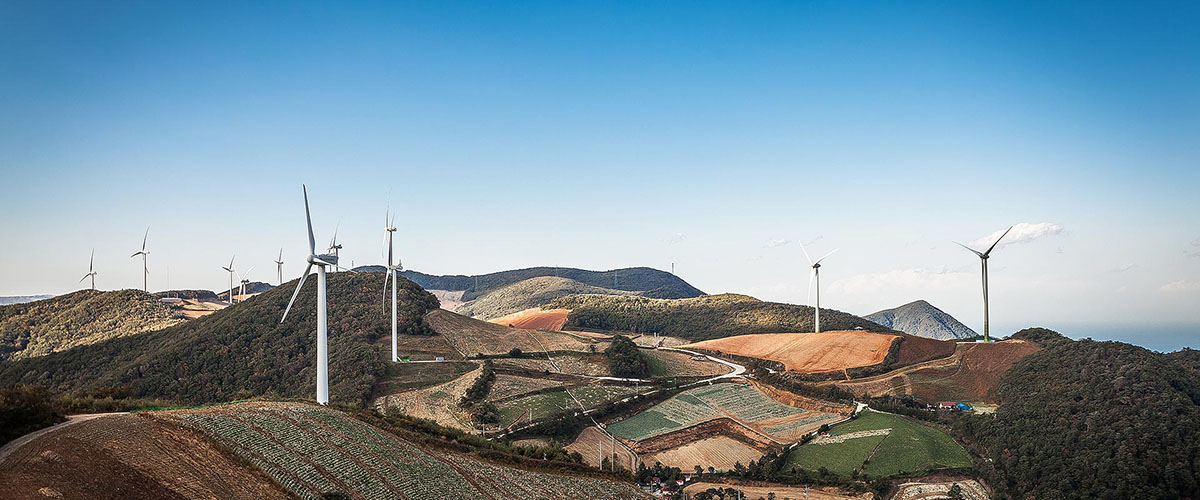
Sitting at an elevation of 1,100 meters, Anbandegi takes its name from the local Gangneung dialect for “anbandeok,” describing land as broad and shallow-bowled as an anban — the wooden block once used with a mallet to pound rice into rice cakes.
The reclamation of this state-owned land was approved in 1965, and the area, first used to grow potatoes and medicinal herbs, has since grown into the largest highland vegetable-farming region in the country, now home to some 30 farming households. The steep terrain rules out mechanized farming, so cattle are still used to work the fields, and the highland cabbage grown here through the sweat and labor of local farmers has earned recognition as some of the finest in the country. Set against the rugged Baekdudaegan mountain range, where spring arrives slowly and winter comes early, Anbandegi's sweeping grasslands take on a strikingly different character with each season. Other sights in the area include the Slash-and-Burn Farmers' Museum, which portrays the daily life and hardships of slash-and-burn farmers in the 1970s and 1980s; Unyuchon Village, a cluster of restored log cabins now home to guesthouses with traditional heated-floor rooms and restaurants; and Myeonge Observatory, which offers sweeping views over downtown Gangneung and the East Sea.
Designated by the Ministry of the Interior and Safety as one of Korea's ‘green roads worth visiting,’ Anbandegi is known for its exotic, tranquil scenery, drawing photographers from across the country and earning a reputation as a prime spot for sunrise and seas of cloud.
09 Gangneung Unification Park A Monument to Peace and Reunification in a Divided Nation
Anin-jin and Jeongdongjin, both in Gangneung on Gangwon Province's coast, carry the weight of Korea's national division. It was here that North Korean forces first landed in their invasion of the South on June 25, 1950, and here again that a North Korean submarine infiltrated the coast on September 18, 1996, an event that sent shockwaves through the nation.
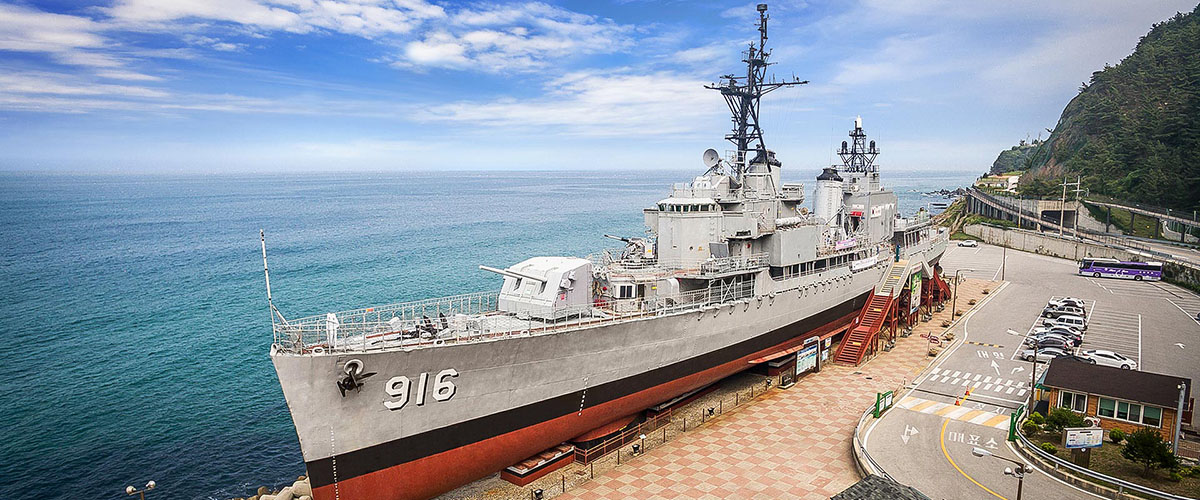
In a place marked by the pain of the Korean War and the 1996 submarine infiltration, Gangneung Unification Park was built to honor the hope for peaceful reunification and to underscore the importance of national security. Made up of a naval vessel exhibition hall and a security exhibition hall, the park brings together military equipment from Korea's army, navy, and air force alongside a captured North Korean submarine, all in one place.
Set where mountains meet the sea in striking harmony, Gangneung Unification Park offers visitors both the sorrow of a divided peninsula and some of Korea's most beautiful natural scenery in a single, moving educational and touristic experience. Inside the retired Republic of Korea Navy vessel ROKS Jeonbuk, visitors can see the actual military equipment and facilities once used aboard the ship, while the outdoor exhibition grounds display retired aircraft, an army tank, a self-propelled howitzer, an air force transport plane, a memorial tower, and an air force monument.
@Source: Gangneung Tourism Organization (Gangneung DMO)
