
IEEE/IEIE ICCE-ASIA 2026
October 28(Wed) – 30(Fri), 2026 / SAINT JOHN’S Hotel, Gangwon-do, South Korea
Program


TODAY 2026. 09. 30
ICCE-ASIA 2026
D-28
Tutorial
Beyond Digital Scaling: Analog, In-Memory, and Unconventional Computing Circuits
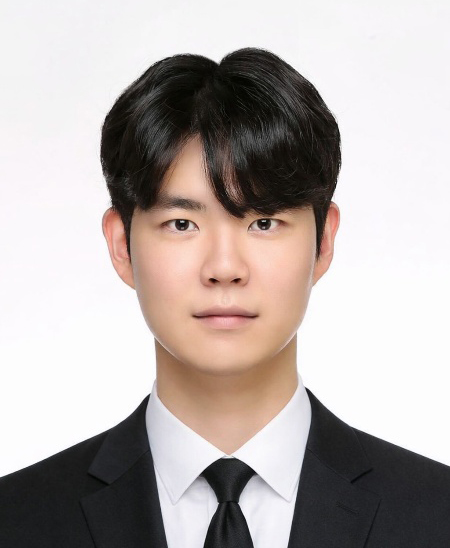
Prof. Jongyoon Choi
Ewha Womans University
Abstract
As conventional digital scaling faces increasing challenges in energy efficiency and data movement, new computing paradigms are being explored beyond traditional digital architectures. This tutorial provides an overview of emerging approaches including analog computing, in-memory computing, and unconventional computing circuits, with emphasis on their fundamental concepts, design opportunities, and key challenges.
Representative research and industrial examples will be introduced to illustrate how these approaches can reshape computation across circuits, architectures, and learning systems. The tutorial will also discuss broader trends toward heterogeneous and physics-inspired computing, offering perspectives on future directions for efficient intelligent systems.
Bio
Edward Jongyoon Choi received the B.S. degree in electrical and computer engineering from the University of Illinois at Urbana–Champaign (UIUC), Champaign, IL, USA, in 2019, and the M.S. and Ph.D. degrees in electrical engineering from Korea Advanced Institute of Science and Technology (KAIST), Daejeon, South Korea, in 2021 and 2025, respectively.
From 2025 to 2026, he worked as a Circuit Design and Analysis Engineer at Annapurna Labs, Amazon Web Services (AWS), Cupertino, CA, USA, working on cloud-scale ML accelerators. In 2026, he joined Ewha Womans University, Seoul, South Korea, and is currently an Assistant Professor at the Division of Electronic and Semiconductor Engineering.
AI-Driven Analog Circuit Design and Optimization
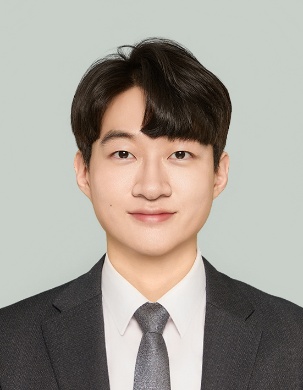
Prof. Suwan Kim
Kyung Hee University
Abstract
Analog circuit design requires designers to navigate a large and highly nonlinear design space while satisfying multiple, often conflicting, performance specifications. Because circuit evaluation relies on computationally expensive simulations, automated analog design often requires a substantial number of circuit evaluations, making efficient design-space exploration a challenging problem.
This tutorial introduces recent advances in AI-driven analog circuit design and optimization. We begin with fundamental approaches that formulate analog sizing as a sequential decision-making problem and discuss how reinforcement learning can automate transistor-level parameter optimization. We then examine the major challenges of these approaches, including simulation cost, sample efficiency, and limited generalization across specifications and circuit topologies.
Building on these foundations, we discuss more recent AI techniques for improving the efficiency, scalability, and generalizability of analog design automation. Representative topics include surrogate-assisted and model-based optimization, learning across multiple circuit designs and specifications, and data-driven methods for understanding complex design spaces. Through these examples, the tutorial provides an overview of how AI techniques are evolving toward more efficient and broadly applicable analog circuit design methodologies.
Bio
Suwan Kim is an Assistant Professor in the Department of Semiconductor Engineering at Kyung Hee University, Korea. He received his Ph.D. degree in Electrical and Computer Engineering from Seoul National University in 2024. Prior to joining Kyung Hee University, he was a Staff Engineer at the AI Center of Samsung Electronics, where he worked on AI-aided design automation.
His research interests lie in electronic design automation, with a particular focus on AI-aided circuit and physical design, analog circuit optimization, and design-technology co-optimization. His recent research includes reinforcement learning and representation learning for analog circuit design, including M3 for multi-circuit optimization and HyperAnalog for analog circuit representation learning. His work has been published in major EDA venues including DAC, ICCAD, DATE, and IEEE TCAD.
Modeling Human–AI Conversations: Speech, Vision, and Interaction Dynamics
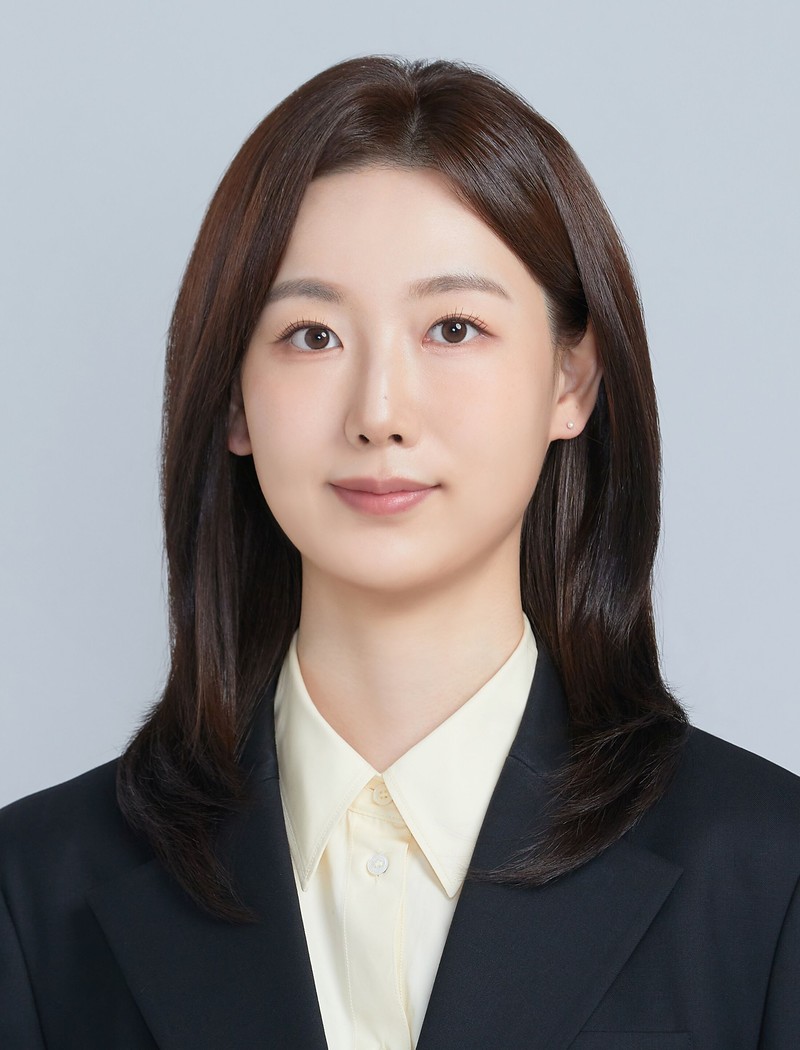
Prof. Se Jin Park
Kyung Hee University
Abstract
Natural human communication combines language with vocal expression, facial movements, and other nonverbal cues. Building AI systems that understand and generate these signals is essential for more natural and engaging human–AI interaction. This tutorial introduces the foundations and recent advances in spoken language models and multimodal conversational AI. It begins with spoken language modeling, highlighting efficient long-form speech generation using hybrid state-space architectures. It then examines audio-visual interaction through direct multilingual audio-visual speech translation and face-to-face dialogue systems, covering unified representations, data challenges, and the generation of speech and facial motion. The discussion extends to empathetic multimodal dialogue and full-duplex interaction, in which systems listen and speak simultaneously. Finally, the tutorial explores open challenges and future directions, including expressive prosody, gesture and gaze, long-context modeling, computational efficiency, and low-latency streaming. It also considers world models for multimodal interaction as an emerging direction for anticipating how verbal and nonverbal responses shape subsequent exchanges. Participants will gain an understanding of the key modeling approaches and research challenges involved in building more expressive, responsive, and context-aware conversational AI systems.
Bio
Assistant Professor, School of Electronics and Information, Kyung Hee University
Ph.D. in Electrical Engineering, KAIST
Former Student Researcher at Google DeepMind (2024)
Former Research Scientist Intern at Meta AI (2025)
Honors & Selected Publications:
• Recipient of the ACL 2024 Outstanding Paper Award
• Published papers featured as Spotlight and Oral presentations at ICML 2025
Generative Diffusion Models: From Score Matching to Foundation Models for Imaging and Robotics
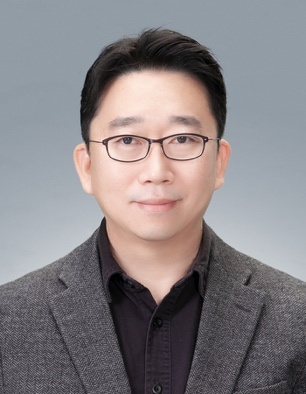
Prof. Se Young Chun
Seoul National University
Abstract
Diffusion models have become the dominant paradigm for generative modeling, powering state-of-the-art systems in image and video synthesis, scientific imaging, and, increasingly, robot learning. This tutorial provides a self-contained introduction to diffusion models and then surveys where the field is heading. We begin with the foundations: denoising score matching, the forward noising process and its reverse-time formulation, the equivalence between DDPM, score-based SDE, and flow-matching views, and the Tweedie identity that underlies denoising as posterior mean estimation. We then cover practical accelerations and controls, including deterministic samplers, distillation and consistency models, classifier-free guidance, and conditioning mechanisms for text, images, and physical measurements. The second half turns to recent trends: diffusion as a prior for inverse problems and computational imaging, latent and rectified-flow architectures behind modern text-to-image and video models, multimodal foundation models built on diffusion backbones, and diffusion policies and vision-language-action models for robotics. Throughout, we highlight open questions in efficiency, controllability, and uncertainty. The tutorial assumes basic familiarity with probability and deep learning and is intended for graduate students and researchers who want a clear conceptual map of diffusion models and an informed view of current directions.
Bio
Se Young Chun received his B.S.E. degree in electrical engineering (EE) from Seoul National University in 1999 and his Ph.D. degree in EE: systems from the University of Michigan - Ann Arbor in 2009. He was a research fellow at Harvard Medical School and also a research fellow at the University of Michigan - Ann Arbor. He has been with UNIST from 2013 to 2021 as an Assistant / Associate Professor in EE / AI. Since 2021, he has joined the Department of Electrical and Computer Engineering, Seoul National University, Seoul, South Korea, as an Associate Professor and he is currently a Full Professor with tenure. He is a senior area editor of IEEE Transactions on Computational Imaging, a member of IEEE Bio Imaging and Signal Processing Technical Committee and an IEEE Biometrics Council Representative of IEEE Vehicular Technology Society. He was the recipient of the 2015 Bruce Hasegawa Young Investigator Medical Imaging Science Award from the IEEE Nuclear and Plasma Sciences Society. His research interests include computational imaging algorithms, generative diffusion models, multimodal foundation models for the applications in imaging, and computer vision for robotics.
